





NANO DIICS
NANO Data Interoperability & Integral Care Solutions


Redefining patient care and collaboration with interoperability solutions.
Nano Health Interoperability Solutions comprehends the challenges you encounter in today’s complex healthcare environment, and we are on a mission to assist you in driving them.
Our objective is to simplify your workflow and enhance care alliance by permitting smooth data exchange across healthcare partakers.
Nano Health interoperability solutions have supported big healthcare enterprises. Nano Health has an interconnected suite of information systems that drive, manage, and intercommunicate clinical knowledge, driving efficiency and enhancing care quality.

Nurturing care alliance across the health continuum
Our solutions benefit insurance payers to fulfill interoperability’s challenges and furnish robust member experiences.
Nano Health Help aid compliance necessities, overreach member expectations, and earn new business and better health outcomes with Nano Health Interoperability Solutions.
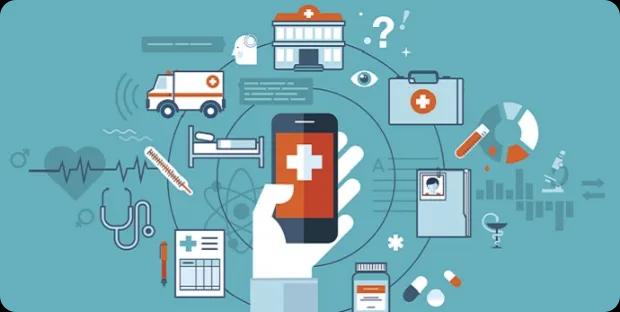
Pioneering the care collaboration
As a global leader in healthcare technology, Nano Health continually strives to unlock the undercover value of clinical data.
The sharing of patient data between medical appliances and information systems has immense prospects to contrive seamless care and more impartial health outcomes – by upholding more precise and real-time clinical judgments, improving clinical workflows, and lessening operational complexity – while at the same time downsizing costs.
Ascend to Heights with State-of-the-art Integral Care Solutions
We acknowledge your alliance’s necessity to access critical data for promoting a variety of use cases. We’ve assisted some of the most well-known healthcare organizations:


Integrate healthcare data to strengthen care pathways, clinical follow-up and every other point where care reaches the patient

Scale cloud services securely for real-time data integration, data warehousing and analytics applications

Support advanced and predictive analytics, and share data with data scientists and the business intelligence tools they already use

Integrate with patient-centric third-party solutions

Enable real-time integration for care call centers that need member and patient information to respond to questions, schedule appointments, and support continued care.

Build contact centres on current integration tooling — an agile foundation that delivers the right data to the right place at the moment it is needed
Deciphering these integration demands implies you must accept a strategic view while standing inclined to dive into the deep end. We pledge a medley of strategic and tactical shifting to bring you on the suitable path fast.

Join us in the journey of building health care pathways
Connect with our specialists to upgrade your data interoperability and care alliance solutions
Related products
Products in the suite that work alongside this one.
More about this product
Standards and code sets
- HL7 FHIR
- HL7 v2
How this works with the rest of the suite
- NANO HIE
The exchange is the running instance of this idea — interoperability is the capability, the HIE is where it is operated.
- NANO HUB
Clinical data is only half the traffic; the hub carries the administrative half, eligibility and authorisation and claims.
- NANO HCAPI
APIs are how a system joins the exchange at all, so integration work starts here in practice.
- NANO PHR
The patient is the one participant present at every encounter, which makes their record the natural place for a longitudinal view.
Frequently asked questions
What is healthcare interoperability?
- The ability of separate systems to exchange data and to use what they receive. The second half is what makes it hard: a message that arrives and cannot be interpreted has moved data without moving meaning, which is why coding standards matter as much as transport.
Why does it matter clinically?
- Sharing patient data between medical devices and information systems supports more precise and real-time clinical judgements, improves clinical workflows and reduces operational complexity — and lowers cost while doing it. A decision made against part of a record is a decision made with the rest of it missing.
What does it do for a payer?
- It helps meet interoperability requirements and gives members a coherent experience rather than one that changes with whichever system they happened to touch. Compliance and member experience turn out to be the same project, because both depend on the payer holding one version of the member.
Do we have to replace our systems?
- No. The point of an interoperability layer is that it connects what is already running. An approach that required replacement would be a migration project wearing an integration label, and it would stall on the first system nobody is allowed to touch.
Where does this sit relative to a health information exchange?
- Interoperability is the capability; the exchange is where it is operated. NANO HIE is the running instance — the place records actually move between organisations — while these solutions are the broader work of making systems able to speak to each other at all.