





Medical Imaging & Diagnosis

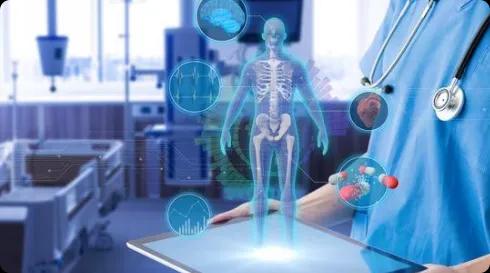
An AI-powered solution that highlights abnormalities, characterises anatomy automatically, and correlates findings with clinical results.
The use of AI in diagnostic medical imaging is undergoing extensive evaluation. Due to the growth in caseloads in healthcare centers all around the world, the need for prompt, impartial tools for the image has increased.
Medical Imaging


Medical imaging / Radiology has emerged as a leader in AI out of a pressing need. Multiple studies have indicated that AI tools can perform just as well, if not better, than human clinicians at identifying features in images quickly and precisely.

Medical imaging data is one of the most valuable sources of information about patients and often one of the most complex.

With megapixel upon megapixel of data packed into the results from X-Ray, CAT scans, MRIs, and other testing modalities, combing through extremely high-resolution images can be challenging.
Benefits


Medical Imaging using AI is helping to improve the productivity of clinical workflow utilizing imaging.

Lowering the risk of “NEGATIVE” clinical consequences.

Accelerating clinical decision making in healthcare practices
Diagnosis, New & Improved
We, at NHS, are passionately setting up the solutions that encounter unique needs in Healthcare.



Productive
Created through the automation and prioritization of tasks and data feeds


Precise
By ensuring the right information availability, filtered, and presented to support the diagnosis as well as ensuring the repeatability of any qualification processes.


Quantitative & Qualitative
By providing applications and tools to automatically or semi-automatically extract and quantify the information.

We’re eager to explain to you how our products can simplify your operations and free your clinicians to concentrate on patients.
More about this product
How this works with the rest of the suite
- NANO EMR
An imaging finding is only useful once it reaches the record the treating clinician is working from.
- NANO HIE
Images and reports have to move between organisations, which is what the exchange carries alongside the record.
- NANO CDSS
A finding changes what should be ordered next, and that is the decision support question.
- NANO DDI
Imaging at population scale is an analytics dataset as well as a clinical one.
Frequently asked questions
Why did AI reach radiology before other specialties?
- Out of a pressing need rather than a preference. Caseloads grew in healthcare centres worldwide, and the demand for prompt, impartial tools for the image rose with them. Radiology also produces digital data natively, which most of medicine does not.
Can AI read an image as well as a clinician?
- Multiple studies indicate AI tools can perform as well as, and in some tasks better than, human clinicians at identifying features in images quickly and precisely. That is a claim about specific identification tasks, not about diagnosis as a whole, and the distinction matters when deciding where to deploy it.
What makes imaging data hard to work with?
- Volume and resolution. Megapixel upon megapixel of data is packed into the results from X-ray, CT, MRI and other modalities, so combing through extremely high-resolution images is challenging in exactly the way software handles well and sustained human attention does not.
Does this replace the radiologist report?
- No. The tools highlight, characterise and correlate; the report and the diagnosis remain the clinician work. Presenting it otherwise is how imaging AI loses the trust of the department it is deployed in.
What does "correlate with clinical results" mean in practice?
- That a finding in an image is read against what else is known about the patient rather than in isolation. An abnormality that is expected given the history is a different thing from the same abnormality with no explanation, and only the record can tell you which one you are looking at.