





Life Sciences Tools & Services
AI-powered Life Sciences Analytics
Nano Health enables life sciences businesses to turn data into life-changing insights. We understand what's at stake for your business and patients.
That's why we offer innovative technologies you can rely on to support you get better, safer therapies to patients faster in a highly regulated landscape. Nano Health can help you rise to the challenges of digital health, improving the way you discover, develop, manufacture, and commercialize medicines.

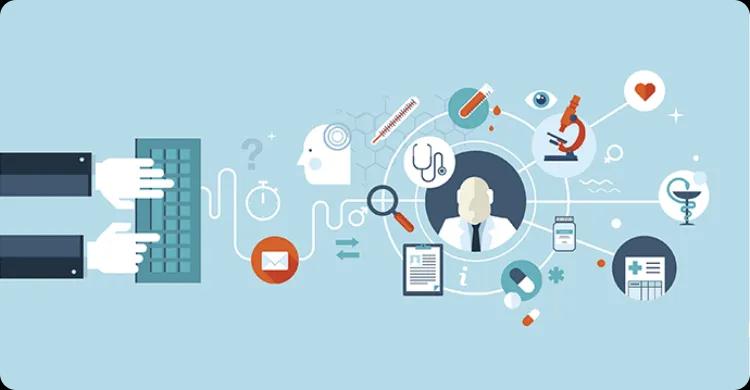


The Data Mindset
Leverage real-world data to demonstrate product value and gain critical insights throughout the product life cycle.
Explore massive amounts of claims, physician, investigator, and patient data to identify patients with specific diseases and comorbidities, or segment physicians by diagnosis, procedure, and patient volume.


Clinical Data Analytics
Get better, safer products to market in a lot less time with faster, more efficient clinical practices. Promote medical analysis and discovery via greater transparency.


Pharmaceutical Commercial Analytics
Use next-generation analytics, including artificial intelligence, to optimize market access, commercialization, and pricing strategies across the entire product life cycle.


Facilitate Research and Development
Use Nano Health as a fully-integrated research analysis platform to accelerate idea generation and foster the development of more successful treatment alternatives.


Better Understand Public Health Issues
To investigate a health case by geography - all the way down to a prescribing clinician level - and build meaningful correlations between prescriptions and hospitalizations with Nano Health.
More about this product
How this works with the rest of the suite
- NANO Rx Insight
Prescribing data is where real-world evidence about how a product is actually used begins.
- NANO BRAIN
Cohort identification across claims at this volume is a model problem before it is a query problem.
- NANO DDI
The analytics layer is where claims, physician, investigator and patient data are explored together.
- NANO IDDK
Drug knowledge is the reference layer that makes a molecule comparable across datasets.
Frequently asked questions
What is real-world data used for here?
- Demonstrating product value and gaining insight throughout the product life cycle, rather than only at trial. Its advantage over trial data is coverage — it describes what happened in ordinary practice, with the patients a trial would have excluded.
How are patient cohorts identified?
- By exploring large volumes of claims, physician, investigator and patient data to find patients with specific diseases and comorbidities. Comorbidity is the hard part: a single-condition cohort is easy to define and rarely the one the question is about.
What does physician segmentation involve?
- Segmenting by diagnosis, procedure and prescribing behaviour, so engagement reaches the clinicians actually treating the relevant patients. It is a data question rather than a marketing one — the segmentation is only as good as the underlying coding.
Does the regulatory environment slow this down?
- It shapes it. The landscape is favourably controlled, which means speed has to be achieved without sacrificing defensibility — analysis that cannot be traced back to its source is not usable regardless of how quickly it was produced.
Where does this sit against the pharmaceutical sector page?
- Life sciences tools and services is the research and evidence side; the pharmaceutical segment page is the commercial and market side. They share the same data foundation, and most organisations need both.